Why Between-Visit Maintenance Matters
Hiring a professional pool service is the smartest move you can make as a pool owner. But even the best weekly service can only do so much if the pool goes completely unattended for the other six days. Pool maintenance between service visits doesn't have to be complicated or time-consuming — a few minutes a day makes a massive difference in water quality, appearance, and the overall health of your pool.
Think of it this way: your pool technician brings the water to perfect balance once a week. Your job is to keep things from going off the rails between those visits. In Jacksonville and St. Johns County, where heat, humidity, and afternoon storms are part of daily life from April through October, what happens between cleanings matters more than most pool owners realize.
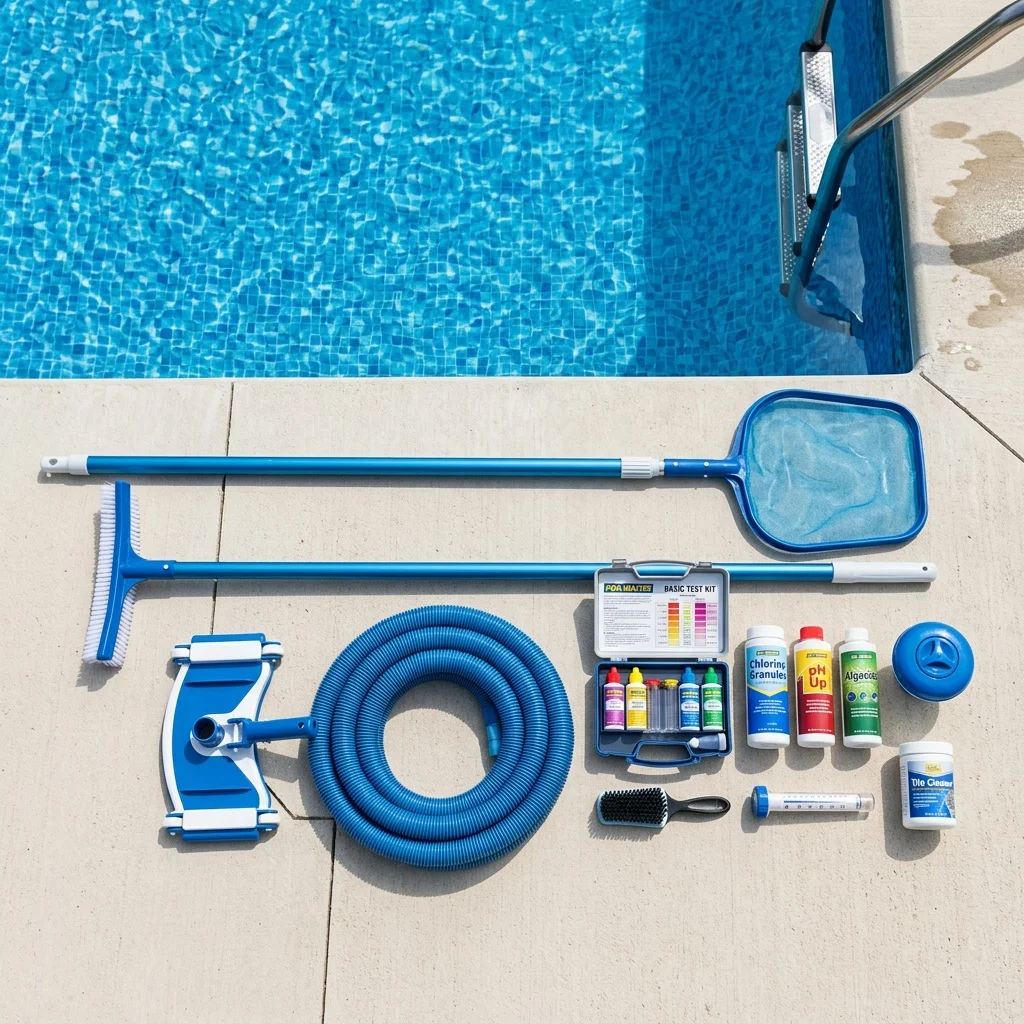
The good news? Pool care between cleanings is mostly about simple habits. You don't need a chemistry degree or expensive equipment. A skimmer net, a garden hose, and about five minutes a day will keep your pool looking great and help your professional service deliver even better results.
Daily Tasks That Take 5 Minutes or Less
These quick daily habits are the foundation of keeping your pool clean between visits. None of them require special skills, and they genuinely take just a few minutes.
Skim the surface. Grab your leaf skimmer and do a quick pass over the water. Remove any floating leaves, bugs, pollen, or debris. In Northeast Florida, live oak leaves, palm fronds, and love bugs are the usual offenders. If debris sits on the surface too long, it sinks to the bottom, decomposes, and feeds algae growth. A 60-second skim each morning prevents that cycle from starting.
Check the skimmer basket. Pop the lid off your skimmer and empty the basket if it's getting full. A clogged skimmer basket restricts water flow through your entire filtration system, which means your pump works harder and your filter cleans less effectively. During heavy pollen season in Jacksonville (typically March and April), you may need to empty it daily.
Glance at the pump and equipment. Take a 10-second look at your equipment pad. Is the pump running? Do you hear any unusual noises? Is there water on the ground that shouldn't be there? Catching a small leak or a tripped breaker early saves you from coming home to a green pool — or worse, a burned-out pump motor that costs $300 to $800 to replace.
Remove large debris from the pool floor. If you see a big leaf pile or a branch sitting on the bottom, fish it out. You don't need to vacuum — just grab anything obvious with your skimmer net. Organic debris on the pool floor releases phosphates and tannins that stain surfaces and feed algae.
Run the pump on schedule. Make sure your pump timer or automation system is set correctly and actually running. In the warmer months here in Jacksonville, your pump should run 8 to 12 hours per day to properly circulate and filter the water. In winter, 6 to 8 hours is usually sufficient. If you notice the pump isn't running during its scheduled hours, that's a problem worth addressing right away.
Mid-Week Checks for Water Level and Chemistry
About halfway between your professional visits — say, Wednesday or Thursday if your technician comes on Monday — spend a few extra minutes on these mid-week checks. This is where you catch small issues before they become big, expensive problems.
Check the water level. Your pool water should sit at the middle of your skimmer opening. If it drops below the bottom of the skimmer, your pump sucks air instead of water, which can damage the motor and leave your pool without filtration. In Jacksonville's summer heat, evaporation can lower your water level by a quarter inch or more per day. Add that to splash-out from swimming, and you might need to top off the pool with your garden hose mid-week. A typical top-off takes 15 to 30 minutes with a standard hose.
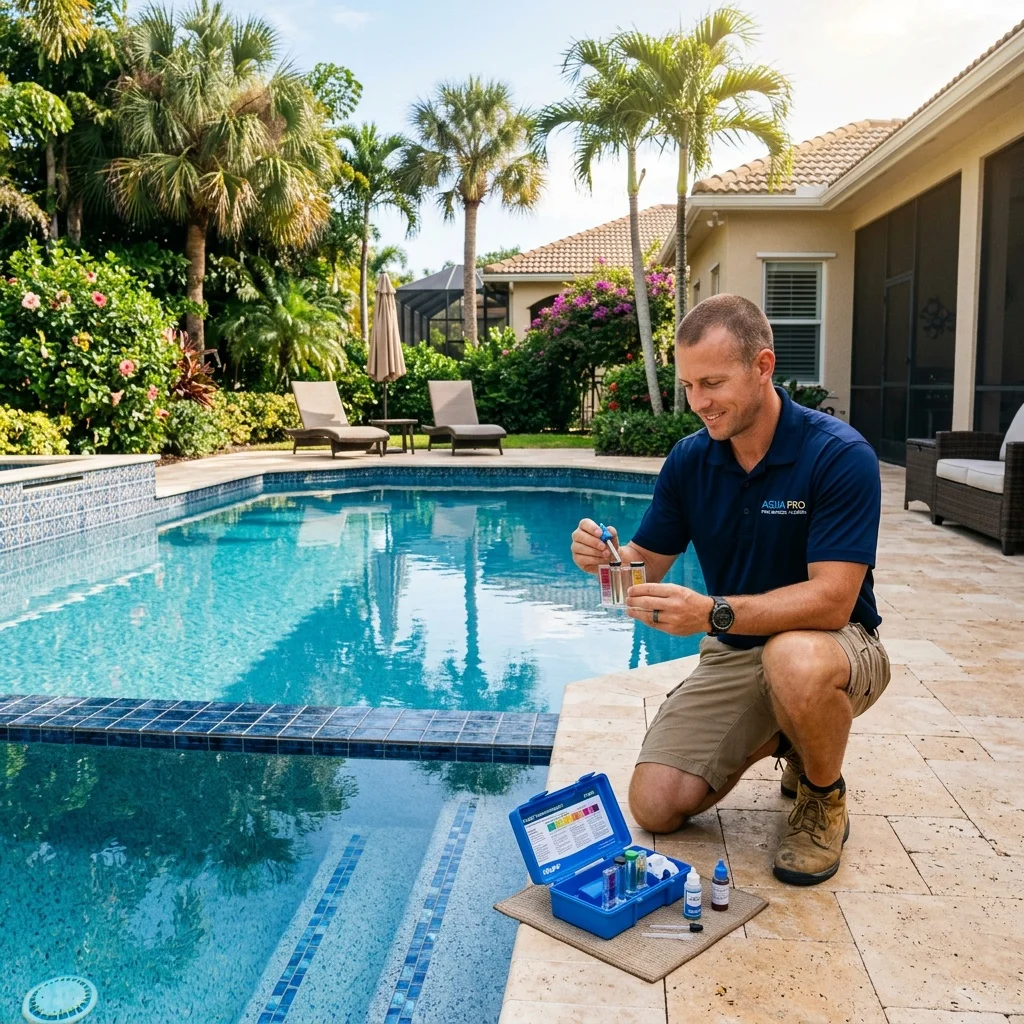
Test your chlorine and pH. A basic test strip kit costs about $8 to $15 at any pool supply store or even Home Depot and Lowe's. Dip a strip, wait 15 seconds, and compare the colors. You're looking for:
- Free chlorine: 2 to 4 ppm. If it's below 2, your pool is vulnerable to algae. Add a quart or two of liquid chlorine (about $5 per gallon at Leslie's or Pinch A Penny) to bring it up.
- pH: 7.4 to 7.6. If pH drifts above 7.8, your chlorine becomes significantly less effective regardless of the level showing on the test strip.
You don't need to adjust alkalinity, stabilizer, or calcium hardness mid-week — leave those to your professional. But keeping chlorine and pH in range between visits prevents the vast majority of water quality issues.
Inspect the filter pressure gauge. Take a quick look at the pressure reading on your filter. Know your "clean" baseline (your pool tech can tell you what it is). If the pressure has risen 8 to 10 PSI above that baseline, the filter needs cleaning. You can backwash a sand or DE filter yourself, or note it for your technician at the next visit.
What to Do After Heavy Rain or Storms
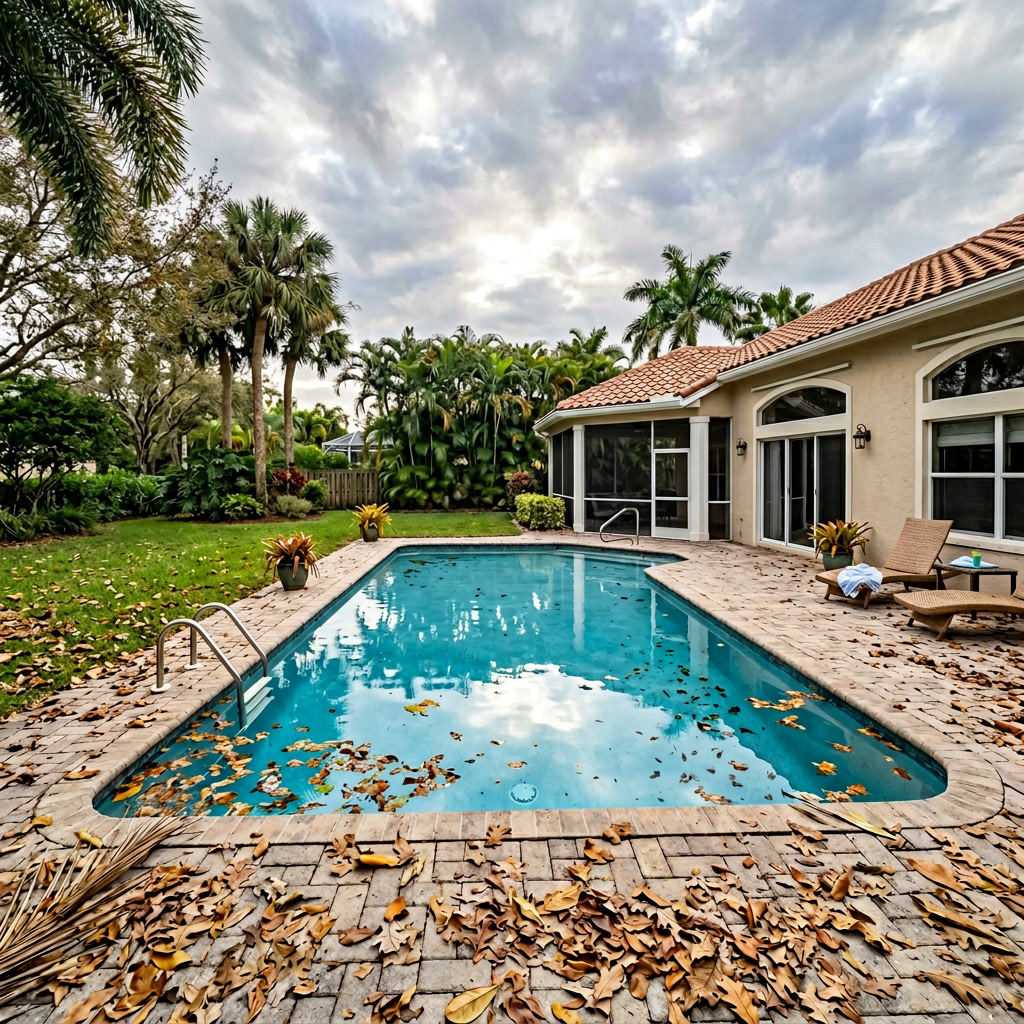
If you live in Jacksonville, you know that summer afternoon thunderstorms can dump an inch or more of rain in under an hour. Heavy rain is the single biggest disruptor of pool chemistry between professional visits, and knowing what to do afterward is one of the most important pool owner responsibilities.
Test and adjust chlorine immediately. Rainwater dilutes your pool chemicals and introduces contaminants — dirt, pollen, fertilizer runoff, and organic debris. A heavy downpour can cut your chlorine level in half. Test within a few hours of the storm ending, and add liquid chlorine if free chlorine is below 2 ppm. For a typical 15,000-gallon pool, one to two gallons of liquid chlorine will raise the level by 2 to 4 ppm.
Skim debris right away. Storms blow in leaves, twigs, dirt, and sometimes even garbage. The sooner you remove this debris, the less it affects your water chemistry. If your pool screen has any tears or gaps, storms push in even more material.
Check the water level. Heavy rain raises the water level, sometimes above the tile line or even the deck. If the water is above the top of the skimmer opening, the skimmer can't pull surface debris effectively. You may need to lower the water level using the waste or drain setting on your filter valve. Lower it back to the midpoint of the skimmer.
Run the pump for an extra cycle. If your pump ran its normal 8 to 10 hours that day, consider running it for an additional 4 to 6 hours after a heavy storm. The extra circulation helps your filter remove contaminants and distributes any chemicals you added.
Check for standing water around equipment. After significant rain, look around your equipment pad for standing water. Electrical components and standing water don't mix. If you see water pooling near your pump, timer, or automation panel, let it drain before resetting any equipment.
Things to Leave to Your Pool Professional
Knowing what to do between visits is important, but knowing what NOT to do is equally valuable. Some tasks are best left to your trained pool technician, and attempting them yourself can actually cause more problems than they solve.
Acid and alkalinity adjustments. Adding muriatic acid to lower pH or alkalinity requires precise measurements and careful handling. Too much acid can damage your pool surface, corrode equipment, and create dangerous fumes. Your pool professional has the experience and testing equipment to make these adjustments safely and accurately.
Adding specialty chemicals. Algaecides, phosphate removers, metal sequestrants, clarifiers, and enzyme treatments all have specific dosing requirements and interaction considerations. For example, adding an algaecide at the wrong time relative to a chlorine shock can render both chemicals ineffective. Let your technician handle these.
Equipment repair and adjustment. Resist the urge to tinker with valves, adjust the salt chlorine generator, change pump speed settings, or troubleshoot electrical issues. Pool equipment involves both plumbing under pressure and electricity near water — a combination that demands professional knowledge. Even something as simple as turning a valve the wrong way can send 20,000 gallons of water somewhere you don't want it.
Filter teardowns. While you can backwash a sand or DE filter between visits, a full cartridge cleaning or DE grid teardown should be done by your technician. Reassembling a DE filter incorrectly can damage the grids or allow DE powder to blow back into the pool.
Diagnosing water problems. If your water turns green, cloudy, or develops an unusual color or odor, resist the temptation to throw chemicals at it. Call your pool service. What looks like an algae bloom could be a metal issue, and the treatments are completely different. A wrong guess can make things worse and more expensive to fix.
Ready to take the guesswork out of pool care? RightWay Pool provides dependable weekly pool service throughout Jacksonville and St. Johns County. We handle the heavy lifting — chemistry balancing, equipment monitoring, thorough cleaning — so your between-visit tasks stay simple and stress-free. Request a free quote today and see how easy pool ownership can be with the right team behind you.