Why Your Pool Went Green (Probably)
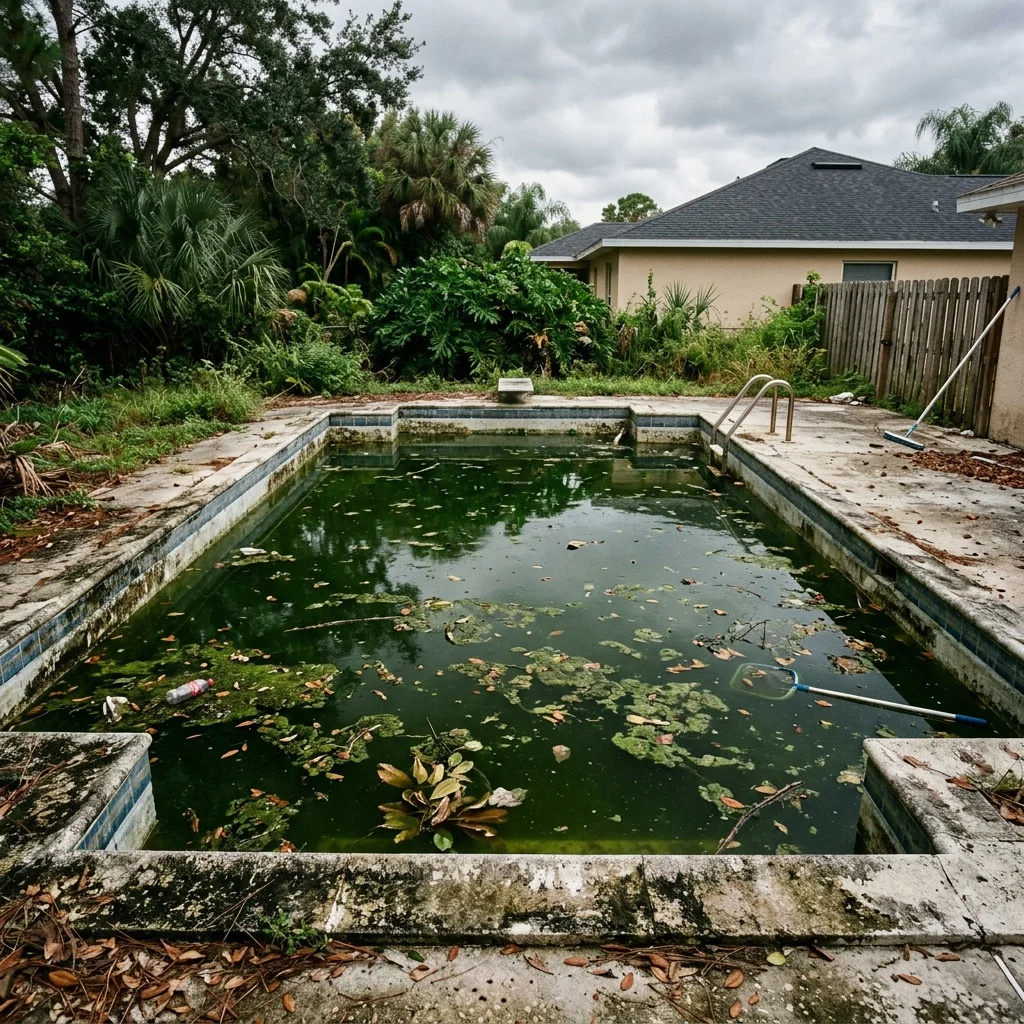
Here's what happened, roughly. Sometime in the last 72 hours, your free chlorine dropped below 1 part per million. Either the sun burned through it (St. Johns gets about 11 hours of UV in May, 13 in July), a heavy rain diluted it, or you forgot to check it for two weeks. Algae spores are always in your pool. They came in on the wind, on a leaf, on someone's swimsuit. They've been waiting. The second the chlorine drops, they multiply. Your pool can go from clear to greenish in 18 hours and from greenish to soup in another 24.
So if you woke up this morning to a pool that looked fine on Monday and looks like spinach water today, you're not alone, and you didn't do anything especially wrong. Florida pools do this.
The Three Colors of Green You'll See
Different algae strains, different urgency, different fixes.
Bright green, cloudy water. This is the most common, especially after a rainy week in Fruit Cove or Julington Creek. It's free-floating chlorella-type algae. Bad chemistry, plus shock plus filter overdrive, usually handles it in 48 hours.
Yellow-green with patches on the walls (mustard algae). This one's chlorine-resistant. It loves shaded corners under steps or behind ladders. Common in screen-enclosed pools in Nocatee where the morning shade lingers. Needs a specific yellow-algae treatment, not just shock.
Dark green to almost black, in small spots that won't brush off. Black algae. It's the rare one, but it's a problem. Roots into plaster pores. If you have a plaster pool that's been neglected, you may have black spots that need wire-brushing and chlorine-paste treatment.
If you're unsure which you have, take a phone picture in good daylight. We can usually tell from a photo whether you're 48 hours from clear or two weeks from full recovery.
The 24-to-48 Hour Recovery (For Green #1)
This is the standard recovery for the most common type. Plan for two days of attention, not a quick afternoon fix.
Day 1, morning.
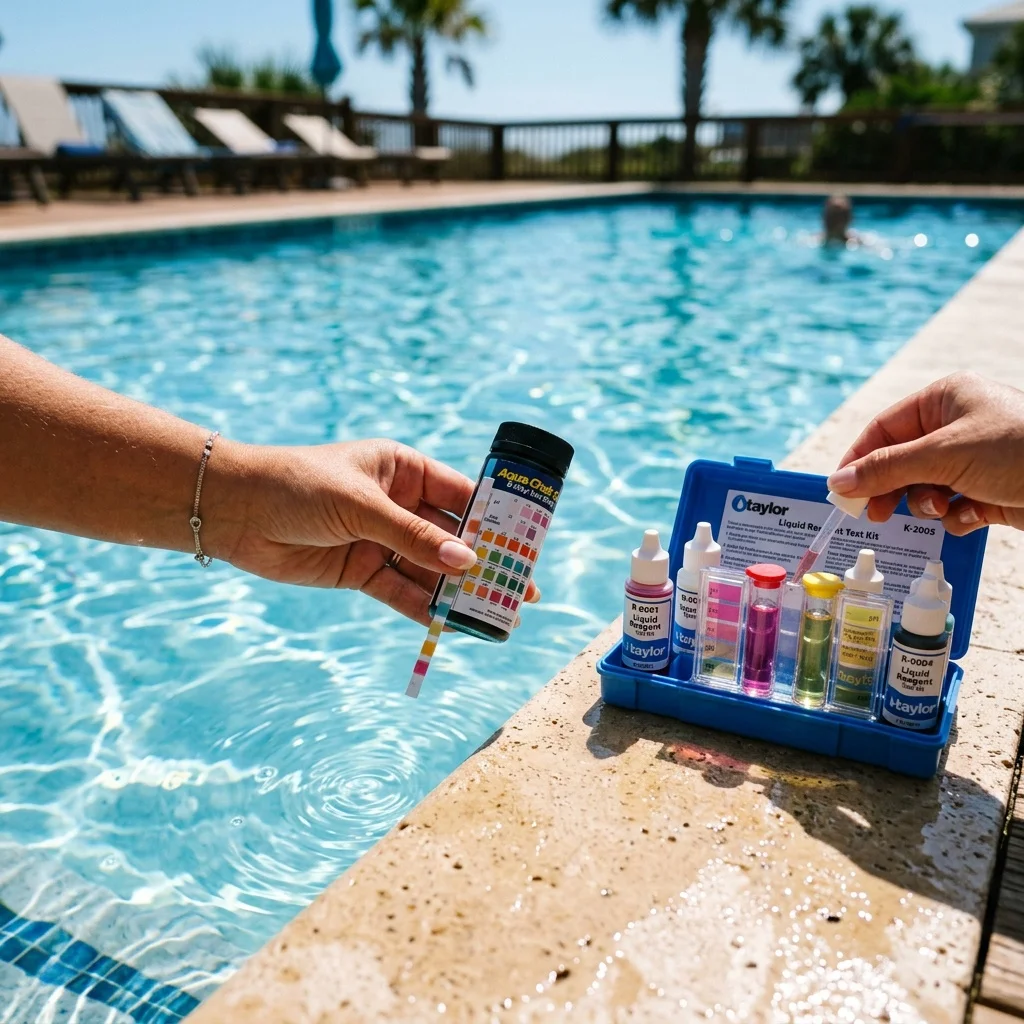
1. Test the water. You're looking at three numbers: free chlorine, pH, cyanuric acid (CYA). Most likely findings: chlorine zero, pH high (because rain), CYA whatever it is. Write them down.
2. Brush. The whole pool. Walls, floor, steps, behind ladders. Get the algae into suspension so the filter and chemicals can reach it.
3. Vacuum the heaviest debris to waste if you can. This means bypassing the filter so the algae-loaded water goes out the backwash line, not back into the pool.
4. Adjust pH down to 7.2 if it's above 7.6. Chlorine is way more effective at the lower end of the pH range.
5. Shock. Multiple gallons of liquid chlorine, not pucks. Pucks are too slow and they raise CYA. For a 15,000 gallon pool, plan on 3 to 4 gallons of 12.5% liquid.
Day 1, evening.
6. Brush again. Run the pump on high overnight.
Day 2, morning.
7. Backwash or clean the filter. It's going to be loaded with dead algae.
8. Test again. If chlorine is holding above 3 ppm and water is cloudy-blue (not green), you're on track. Add a clarifier to help the filter grab the fine particles.
9. Brush a third time. Yes, really.
Day 2, evening.
10. Water should be visibly clearer. If you can see the main drain through cloudy water, the filter is doing its job. Another 12 to 24 hours and it should clear completely.
If by Day 2 evening you don't see meaningful clearing, something else is going on. Could be a phosphate problem (lawn fertilizer runoff is a big deal in newer RiverTown phases). Could be CYA over 100, which makes chlorine ineffective. That's when you call a pro.
What Goes Wrong With DIY Recovery
Three common mistakes we see when homeowners attempt recovery alone.
Using pucks instead of liquid. Pucks contain cyanuric acid, the chlorine stabilizer. If your CYA is already high (over 70), adding more is locking your chlorine into ineffectiveness. Liquid chlorine has no stabilizer, so it's the right tool for recovery.
Adding algaecide before shocking. Algaecide is for prevention, not treatment. Adding copper-based algaecide to a heavily algae-loaded pool can stain plaster. Shock first, then maintain with low-dose algaecide later.
Brushing once and walking away. Algae sticks. The first brush gets the loose stuff. The third brush gets what was hiding. Skip the second and third brushings and you'll be doing the whole thing again in a week.
Prevention, So You're Not Reading This Again in August
Once recovered, four habits keep you green-free:
1. Keep free chlorine between 2 and 4 ppm. Always. Use a saltwater system if you don't want to think about it daily.
2. Watch CYA. Don't let it climb above 70. Refill the pool partially each year if you only use pucks.
3. Brush walls weekly. Even when the pool looks clean. You're disrupting the spores before they get a foothold.
4. Test after every heavy rain. Florida rain dilutes everything. Five minutes with a test strip after a storm could save you a 48-hour recovery weekend.
When to Call a Pro
If you've done the steps and the pool isn't clearing, get help. Specific signs:
- It's been 72 hours and the water is still distinctly green
- You're seeing black spots that won't brush away
- Your CYA test maxed out the chart (over 100)
- The pump is starting to sound stressed (algae overloads filters)
- Your chemistry is jumping around in ways the test kit can't explain
A green pool recovery from us runs $300 to $600 depending on size and severity. That's a lot, but it's less than the cost of damaged plaster or a burnt-out pump.
The Quiet Cost
Every algae bloom shortens the life of your plaster, etches small pores into the surface, and gives next year's algae a better grip. Recovery is loud and expensive. Prevention is boring and cheap. Pick one.
Pool went green and you don't want to spend the weekend chasing it? Book [green pool recovery in St. Johns, FL](/services) and we'll have it back to swim-ready in 48 to 72 hours.