Jacksonville Winter Temperatures and Your Pool
If you've lived in Jacksonville or St. Johns County for any amount of time, you know our winters are nothing like what the rest of the country deals with. We're not draining pools and covering them with heavy tarps the way homeowners do in Ohio or New York. But here's the thing — our mild winters can actually lull pool owners into a false sense of security, and that's when problems sneak up on you.
Jacksonville's winter temperatures typically range from the low 40s at night to the mid-60s during the day, with the occasional cold snap dipping into the 30s. Water temperatures in most residential pools hover between 50 and 65 degrees Fahrenheit from December through February. That's cold enough to make swimming unappealing for most people, but it's not cold enough to put your pool's chemistry and equipment on autopilot.
The short answer to "do you need pool service in winter in Jacksonville?" is yes — and the longer answer explains why skipping those cooler months can set you up for expensive headaches come spring.
What Happens to Neglected Pools in Winter
It's tempting to cancel your pool service when nobody's swimming. You figure the pool is just sitting there, so what could go wrong? Quite a bit, actually.
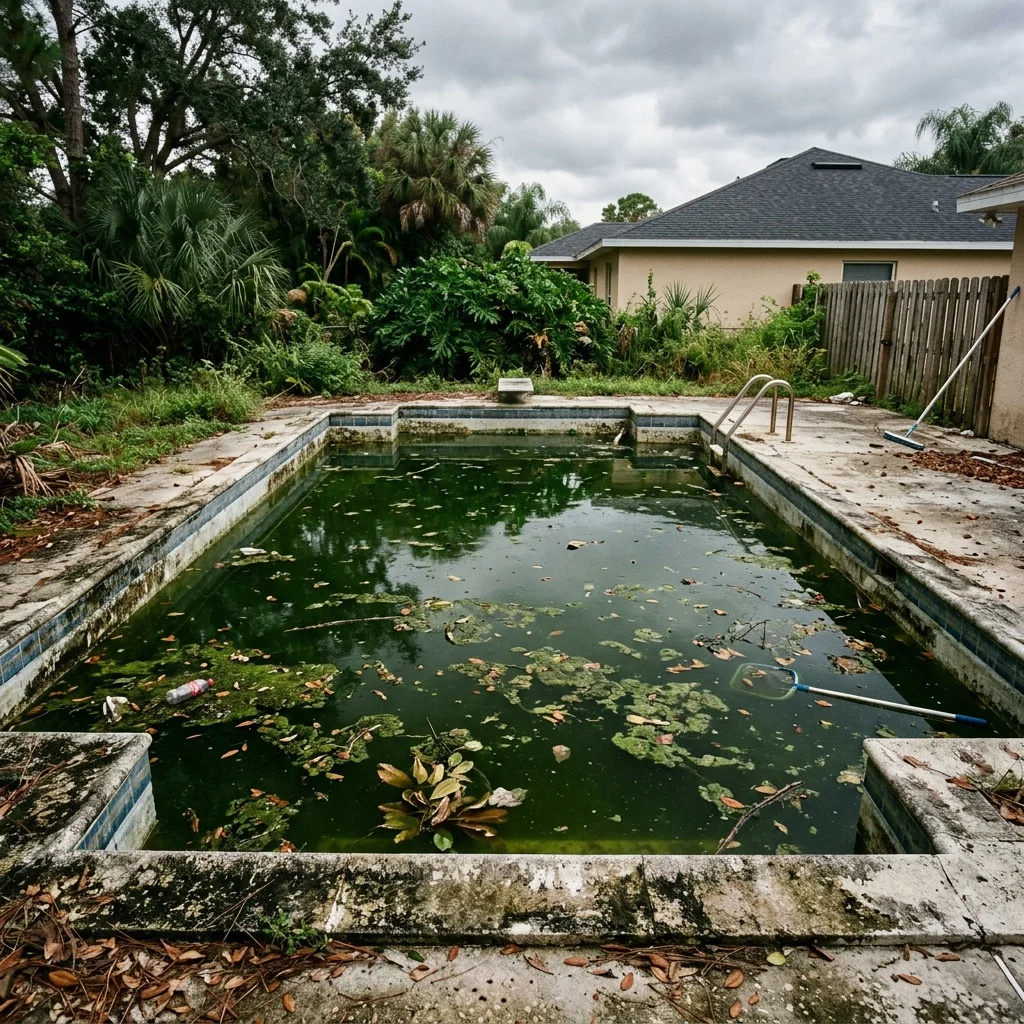
Staining takes hold. Leaves from live oaks and other trees are at their peak drop during late fall and winter in Northeast Florida. When leaves sit on the pool floor for weeks, they release tannins and organic acids that create stubborn brown and rust-colored stains on plaster and pebble surfaces. Once those stains set in, removing them often requires an acid wash — a service that typically costs $400 to $800 and shortens the lifespan of your pool finish.
Algae doesn't fully stop. Many pool owners assume algae is only a summer problem. While algae growth does slow significantly below 60 degrees, it doesn't stop entirely. Green algae spores are always present in outdoor pools, and a stretch of warm winter days in the mid-70s — which happens several times each Jacksonville winter — is enough to trigger a bloom if your chlorine has been depleted. A green pool recovery in January costs just as much as one in July: $250 to $500 or more.
Equipment deteriorates. Pool pumps, filters, salt cells, and heaters don't do well sitting idle for extended periods. Seals dry out, O-rings crack, and gaskets lose their flexibility. Standing water in filter housings can develop bacteria or mold. When you fire everything back up in spring, you may find yourself replacing components that would have been fine with regular operation.
Water level issues. Winter rain in Jacksonville is sporadic but can be heavy. Without someone monitoring your pool, water levels can rise high enough to flood the skimmer, preventing proper circulation. Conversely, extended dry spells can drop water below the skimmer line, causing your pump to run dry and potentially burn out — a repair that runs $400 to $800 or more depending on your pump type.
Winter Pool Chemistry: What Changes
Pool chemistry doesn't take a vacation just because you do. The rules shift during cooler months, and understanding those changes is key to keeping your pool healthy year-round.
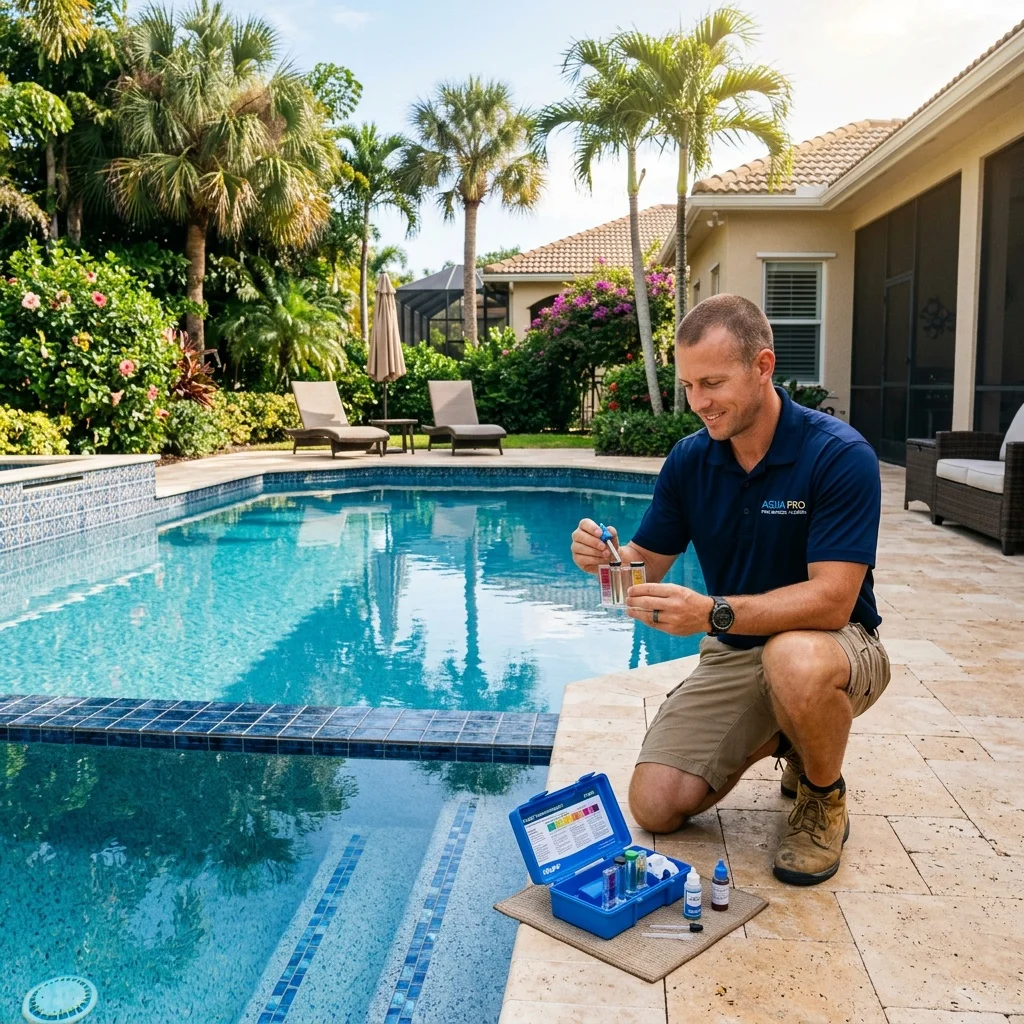
Chlorine demand drops — but doesn't disappear. Warmer water consumes chlorine faster because bacteria and algae are more active, and UV exposure is more intense. In winter, your pool uses less chlorine, but you still need to maintain a minimum of 1 to 2 ppm of free chlorine. Without regular testing and adjustment, chlorine can drop to zero within two to three weeks, leaving the water completely unprotected.
pH tends to drift upward. Cooler water temperatures and reduced swimmer load mean fewer factors pulling pH down. Meanwhile, the natural tendency of pool water is to increase in pH over time due to off-gassing of carbon dioxide. If nobody is testing and adjusting, pH can climb above 8.0, where chlorine becomes nearly ineffective and calcium scaling accelerates.
Alkalinity and stabilizer still matter. Total alkalinity keeps your pH stable, and cyanuric acid (stabilizer) protects chlorine from UV breakdown. Even during shorter winter days with less intense sunlight, stabilizer levels between 30 and 50 ppm are important. Rain — which is slightly acidic — can gradually lower both alkalinity and pH if left unchecked for weeks at a time.
Phosphates accumulate. All those leaves and organic debris that fall into your pool during winter break down into phosphates, which are the primary nutrient source for algae. If phosphate levels climb above 300 ppb over the winter, you're essentially setting the table for an algae explosion the moment water temperatures rise in March. A phosphate treatment runs about $50 to $100 — far cheaper than dealing with the algae bloom it prevents.
Equipment Care During Cooler Months
Your pool equipment needs consistent attention during winter, even if you're running it fewer hours per day.
Reduce pump run time, but don't turn it off. During summer, most Jacksonville pools need 8 to 12 hours of pump operation daily. In winter, you can typically reduce that to 4 to 6 hours. But turning the pump off entirely is a mistake. Circulation prevents stagnant water, distributes chemicals evenly, and keeps your filter working. On nights when temperatures are expected to drop below 35 degrees — which happens a handful of times each winter — run your pump continuously to prevent pipes from freezing. Even in Jacksonville, a hard freeze can crack PVC plumbing and damage pump housings if water is sitting still.
Monitor your salt cell. If you have a saltwater pool, most salt chlorine generators reduce output or shut off entirely when water temperatures drop below 60 degrees. This is a built-in safety feature, but it means your pool may not be producing any chlorine at all during the coldest weeks. You'll need to supplement with liquid chlorine or granular shock to maintain safe sanitizer levels. Check your salt cell's indicator panel regularly and clean it if calcium buildup is present.
Inspect seals, O-rings, and gaskets. Cooler temperatures cause rubber and silicone components to contract and become less pliable. Take a few minutes each month to visually inspect the pump lid O-ring, filter drain plugs, and valve seals. A thin coat of Jack's Magic Lube or a similar silicone-based lubricant keeps them supple and prevents air leaks that reduce system efficiency.
Keep the filter clean. Even with reduced debris load in winter, your filter still needs periodic attention. Check the pressure gauge monthly and clean or backwash when pressure rises 8 to 10 PSI above your clean baseline. A clogged filter forces your pump to work harder, increasing energy costs and accelerating wear on the motor.
Why Year-Round Service Saves You Money
Let's talk dollars and cents, because this is where the decision becomes clear.
The cost of year-round service: A typical weekly pool maintenance plan in Jacksonville runs $120 to $200 per month, chemicals included. Some companies offer a reduced winter rate or biweekly service during December through February, which can bring the cost down to $80 to $120 per month. Over a full year, you're looking at roughly $1,500 to $2,200 for uninterrupted professional maintenance.
The cost of skipping winter service: Pool owners who cancel service for three or four months commonly face some combination of the following when they restart in spring:
- Green pool recovery: $250 to $500
- Stain removal or acid wash: $400 to $800
- Pump or equipment repair from idle damage: $200 to $800
- Filter deep cleaning or media replacement: $75 to $400
- Elevated chemical costs to rebalance neglected water: $50 to $150
That adds up to $975 to $2,650 in catch-up costs — easily more than you saved by canceling winter service. And that doesn't account for the reduced lifespan of your pool finish and equipment from repeated cycles of neglect and recovery.
Prevention is always cheaper than repair. This is the fundamental principle of pool ownership, and it applies in January just as much as in July. A pool technician visiting your pool biweekly during winter catches small problems before they become expensive ones. A cracked O-ring gets replaced for $5 instead of causing a pump to lose prime and burn out for $600. A few leaves get skimmed before they stain your plaster. Chlorine gets topped off before algae takes hold.
Your pool is a major investment. The average pool in the Jacksonville and St. Johns County area adds $30,000 to $50,000 or more to a home's value. Year-round maintenance protects that investment the same way regular oil changes protect your car. You wouldn't park your car for three months without any maintenance and expect it to run perfectly — your pool deserves the same respect.
Ready to keep your pool in top shape all year long? RightWay Pool offers flexible year-round maintenance plans designed for Jacksonville's unique climate. Whether you want full weekly service or a reduced winter schedule, we'll keep your pool clean, balanced, and ready to swim whenever you are. Contact us today for a free estimate on year-round pool service and see how affordable peace of mind can be.